
← All ArticlesClassical Mechanics

Classical Mechanics

Newton's laws, kinematics, projectile motion, momentum, gravitation, and the mathematical framework that governs everyday motion — explained from first principles.

23 articles

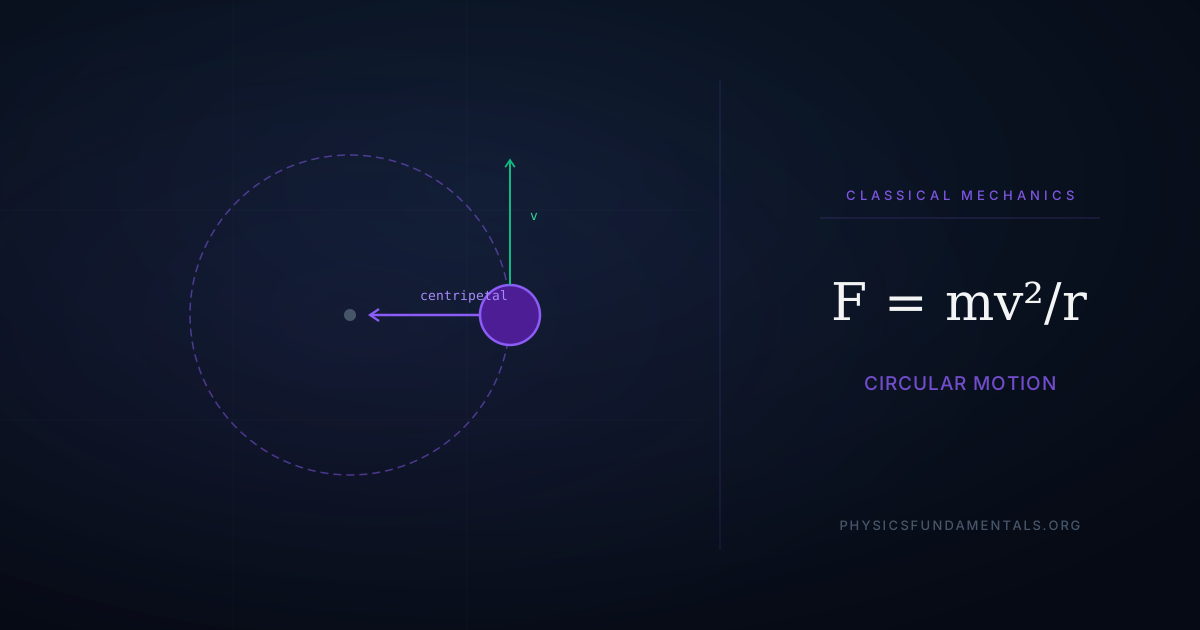
Circular motion — ball on a string tracing a circle with centripetal force directed toward the centre
Classical Mechanics
Physics Fundamentals Editorial Team14 min read

Circular Motion and Centripetal Force: Formula, Charged Particles & Worked Examples

A ball whirled on a string, a car rounding a bend, the Moon orbiting Earth, an electron in a magnetic field — all are in circular motion. Despite moving at constant speed, every object in unifo...

Read article →
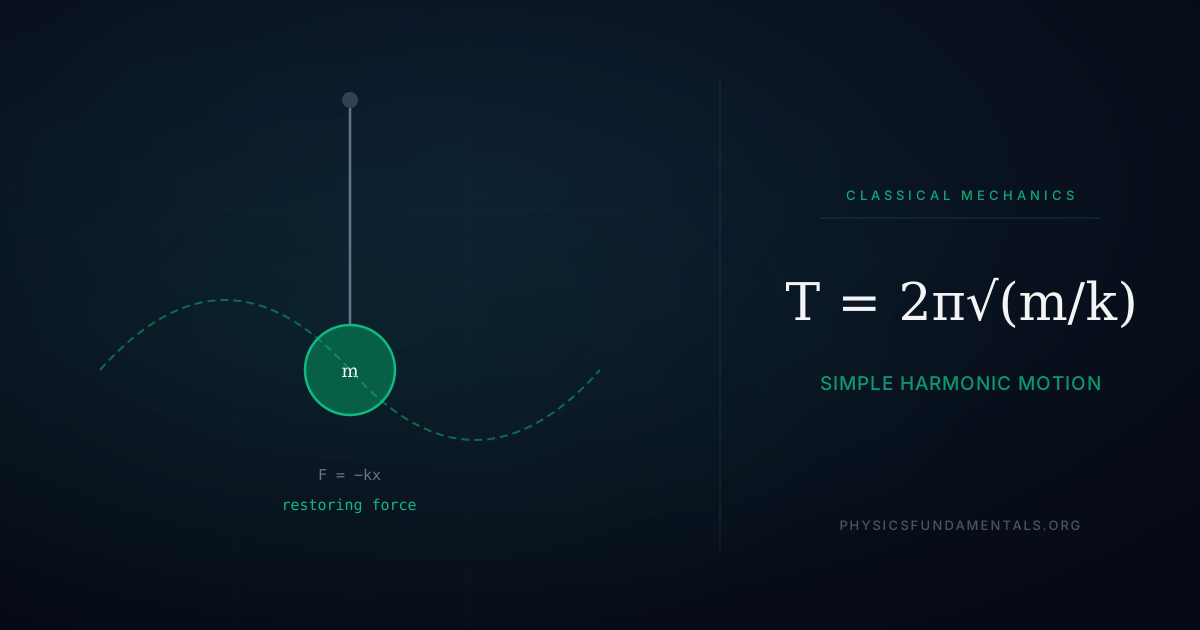
Simple harmonic motion — pendulum tracing a sinusoidal oscillation pattern
Classical Mechanics
Physics Fundamentals Editorial Team15 min read

Simple Harmonic Motion: x = A cos(ωt), Period & Energy — Full Guide

Simple harmonic motion (SHM) is the most important type of oscillation in physics. A pendulum swinging, a mass bouncing on a spring, a vibrating guitar string, an alternating electric current —...

Read article →
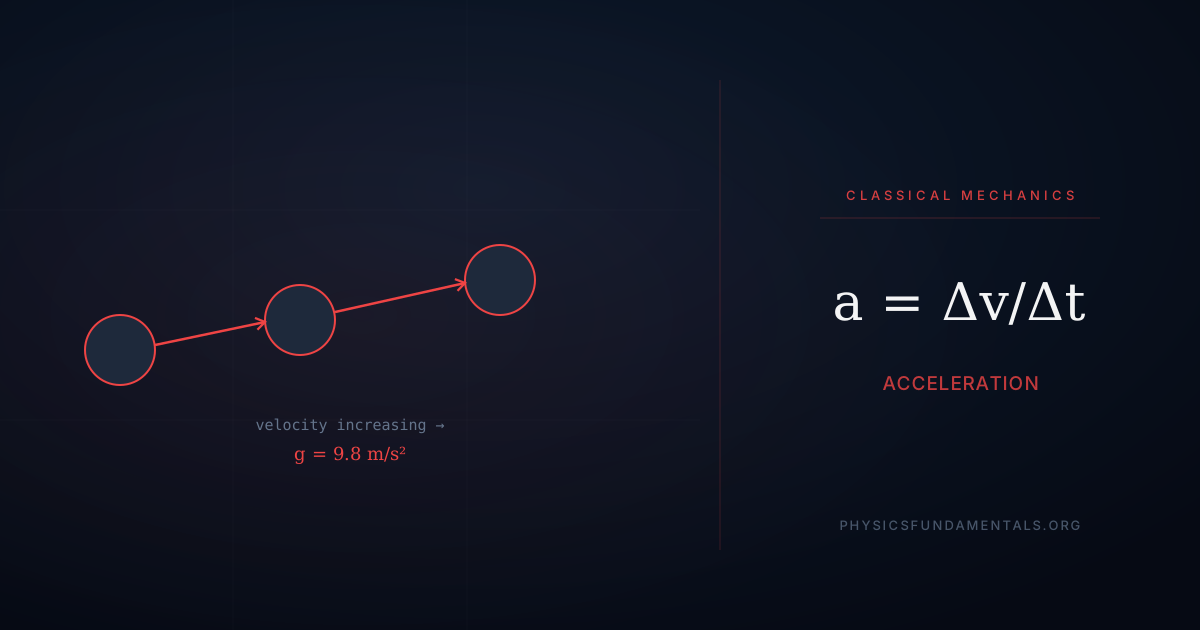
Acceleration in physics — rocket launching illustrating rapid change in velocity over time
Classical Mechanics
Physics Fundamentals Editorial Team12 min read

Acceleration in Physics: a = Δv/Δt Formula, Types & 4 Worked Examples

Acceleration is the rate at which velocity changes. Because velocity is a vector, any change in either the speed or the direction of motion constitutes acceleration. Every time you brake in a c...

Read article →
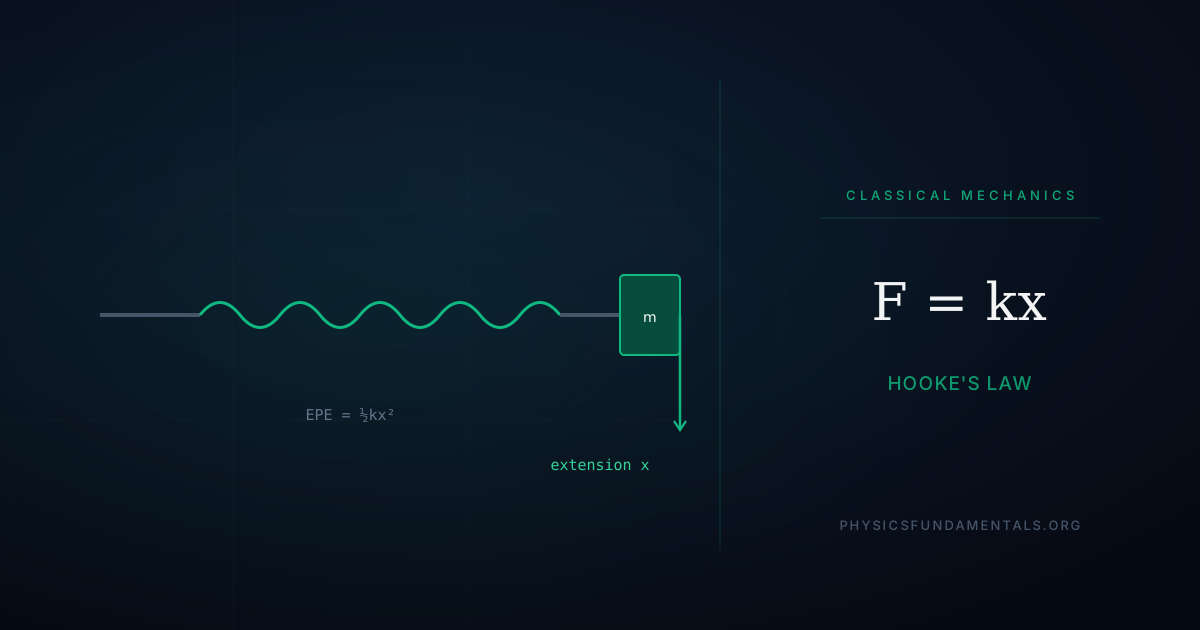
Hooke's law — spring being stretched with proportional relationship between force and extension
Classical Mechanics
Physics Fundamentals Editorial Team12 min read

Hooke's Law F = kx: Spring Constant, Elastic PE & 3 Worked Examples

Springs are among the most studied objects in physics — not because springs themselves are special, but because the spring restoring force is the simplest and most important type of restoring f...

Read article →
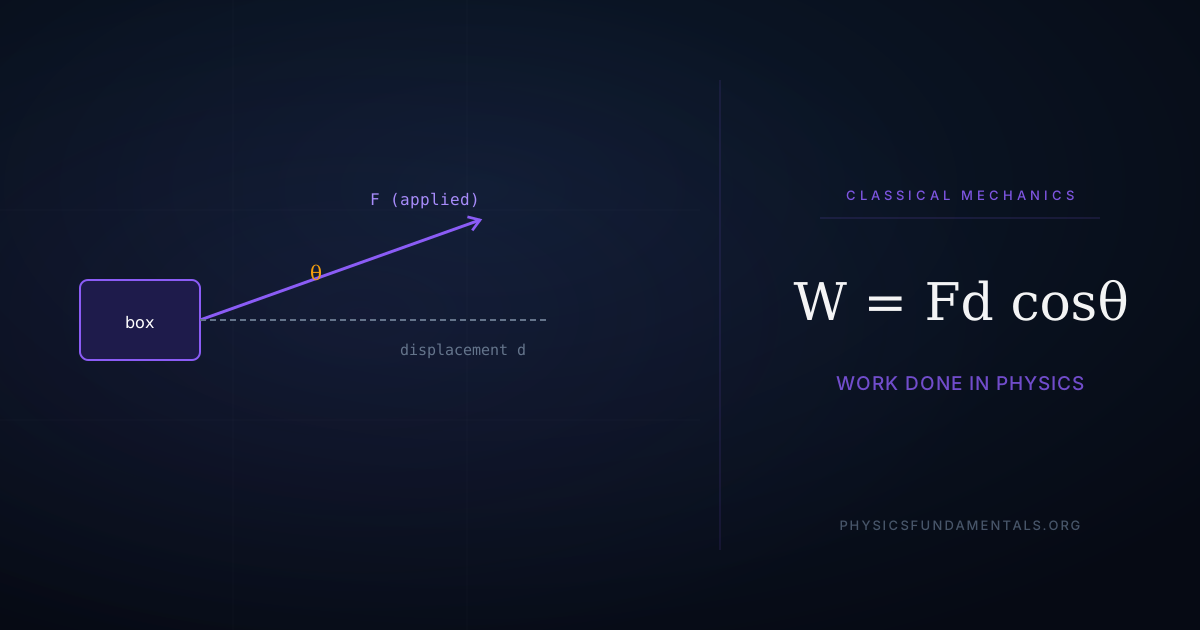
Work done in physics — person pushing a box illustrating force applied over displacement
Classical Mechanics
Physics Fundamentals Editorial Team13 min read

Work Done in Physics: Formula W = Fd cosθ, Examples & Common Mistakes

Push a box across a floor. Lift a weight from the ground. Compress a spring. In each case, a force acts through a distance — and that's the physical definition of work done. Work done in physic...

Read article →
Free fall and terminal velocity — skydiver falling with gravity and air resistance forces labelled
Classical Mechanics
Physics Fundamentals Editorial Team13 min read

Free Fall and Terminal Velocity: Definition, Formula & 3 Worked Examples

Drop a feather and a hammer on the Moon — they hit the ground at exactly the same time. This famous demonstration (carried out by Apollo 15 astronaut David Scott in 1971) reveals something prof...

Read article →
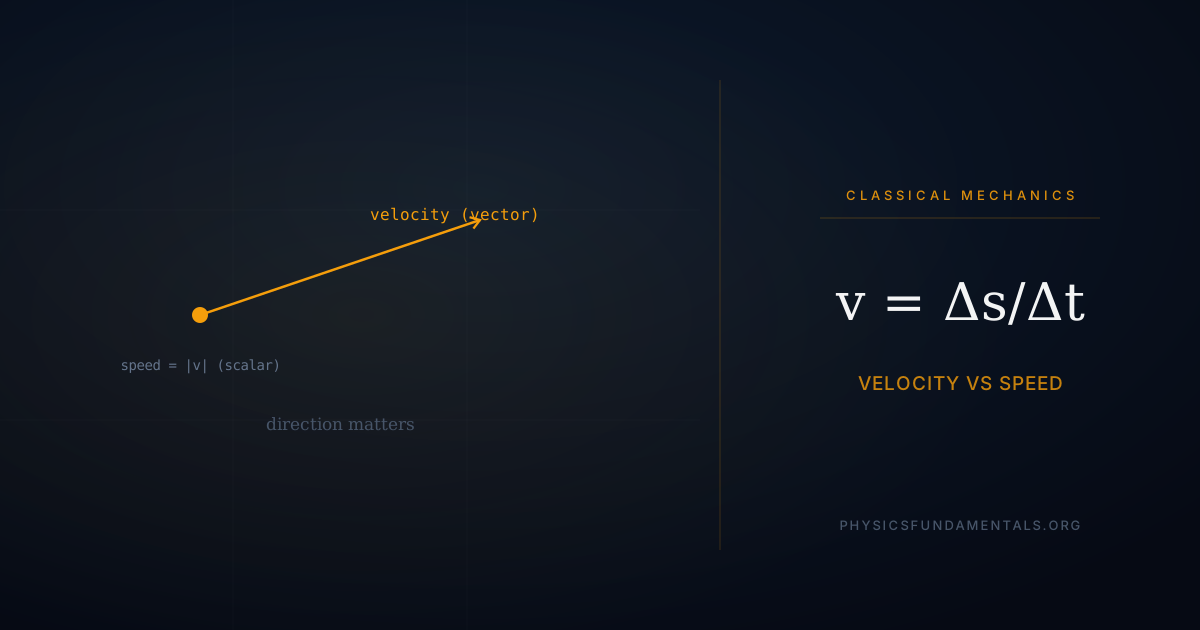
Velocity vs speed — runner on a track illustrating the vector nature of velocity versus the scalar nature of speed
Classical Mechanics
Physics Fundamentals Editorial Team11 min read

Velocity vs Speed: Vector vs Scalar, Formulas & 3 Worked Examples

In everyday conversation, "speed" and "velocity" are used interchangeably. In physics, they are fundamentally different quantities — and mixing them up leads to wrong answers. Speed is a scalar...

Read article →
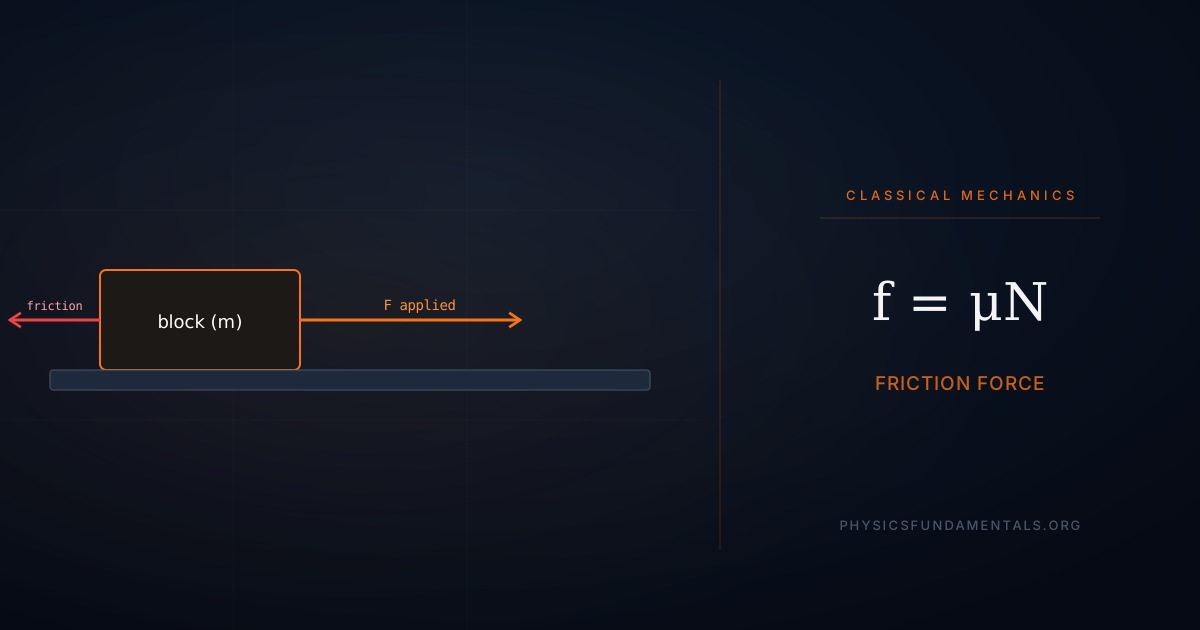
Friction force — block being pushed across a surface showing friction opposing motion
Classical Mechanics
Physics Fundamentals Editorial Team14 min read

Friction Force: Types, Formula f = μN & 4 Worked Examples

Friction is the contact force that opposes relative motion between surfaces. It is why you can walk without slipping, why cars can brake, and why you need to keep pushing a box to keep it movin...

Read article →
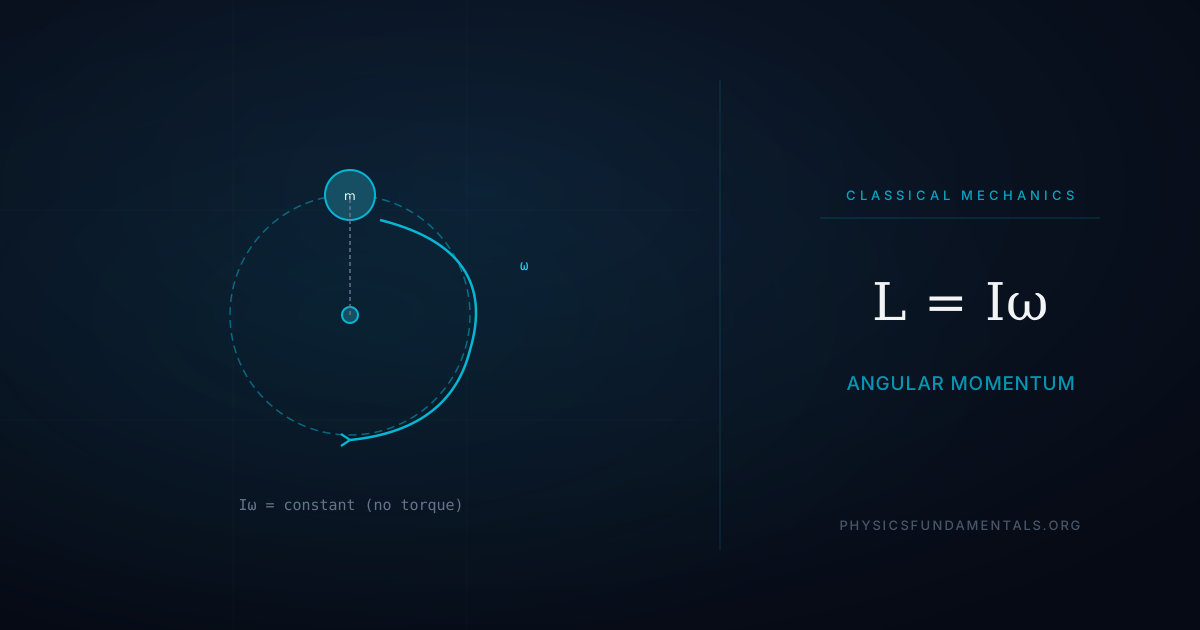
Angular momentum — spinning ice skater pulling arms in to spin faster, illustrating conservation of angular momentum
Classical Mechanics
Physics Fundamentals Editorial Team14 min read

Angular Momentum: L = Iω, Conservation Law & Real-World Examples

A spinning ice skater pulls her arms inward — and immediately spins faster. A planet orbits faster when closer to the Sun. A gyroscope resists being tilted. A spinning top maintains its orienta...

Read article →
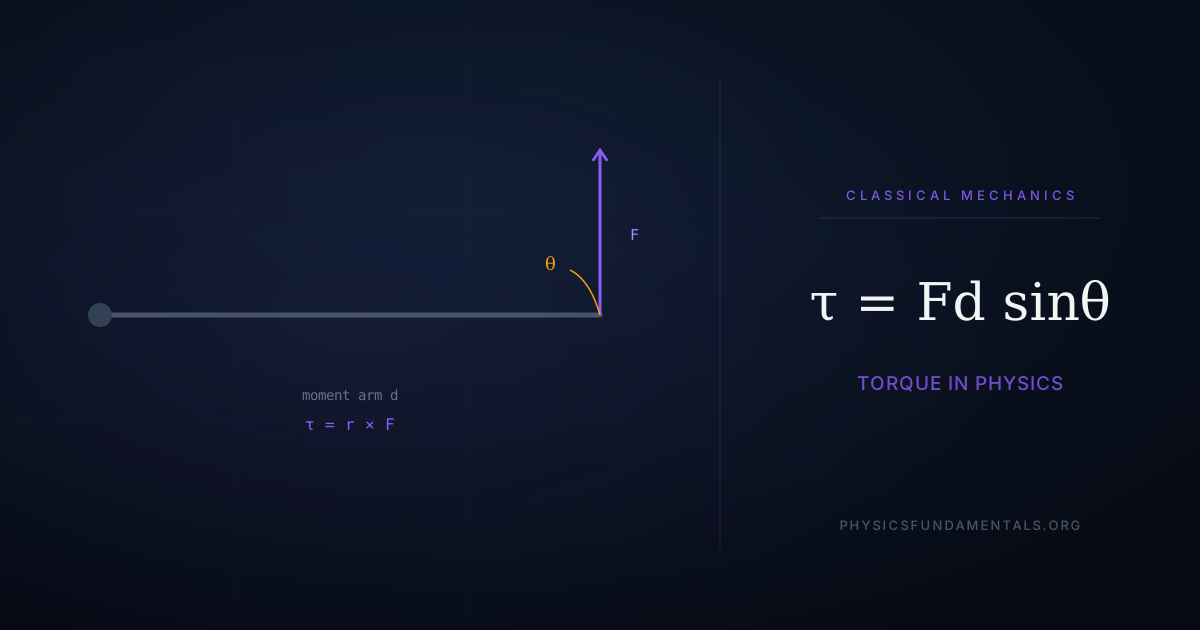
Torque in physics — spanner turning a bolt illustrating rotational force and moment arm
Classical Mechanics
Physics Fundamentals Editorial Team13 min read

Torque in Physics: τ = rF sinθ Formula, Worked Examples & Applications

When you push a door open, you push near the edge — not near the hinge. Instinctively you know that the same force applied further from the pivot produces a greater turning effect. That turning...

Read article →
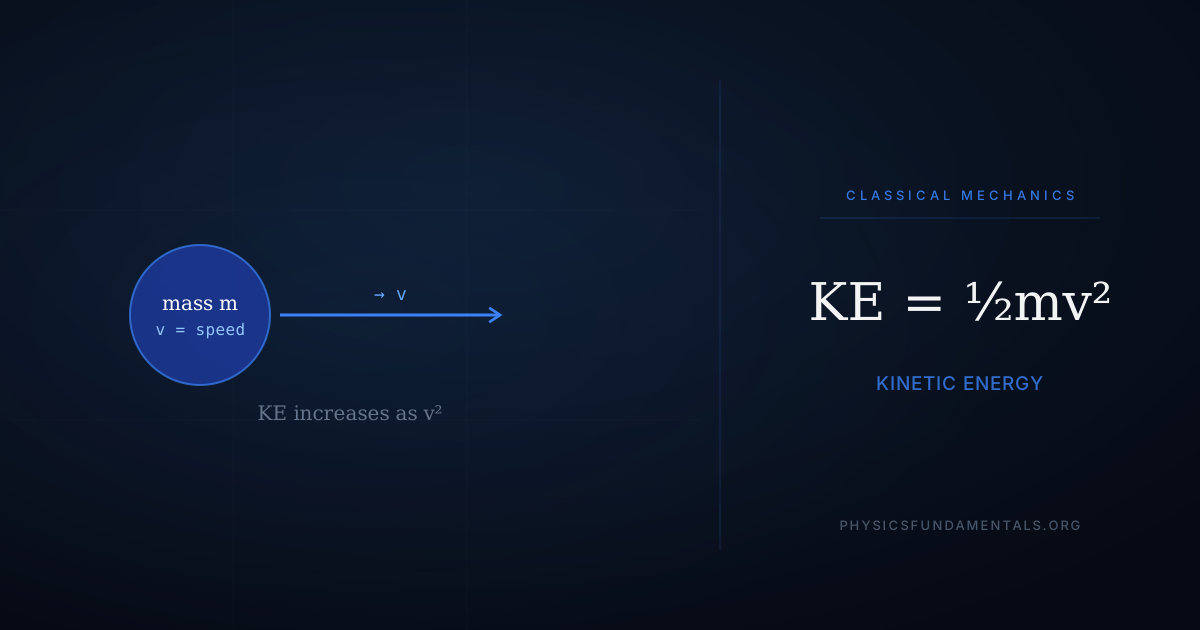
Kinetic energy — speeding car illustrating the relationship between mass, velocity, and energy of motion
Classical Mechanics
Physics Fundamentals Editorial Team16 min read

Kinetic Energy: Definition, Formula KE = ½mv², Examples

Kinetic energy is one of the two fundamental forms of mechanical energy — the other being potential energy. Where potential energy is stored energy waiting to be released, kinetic energy is ene...

Read article →
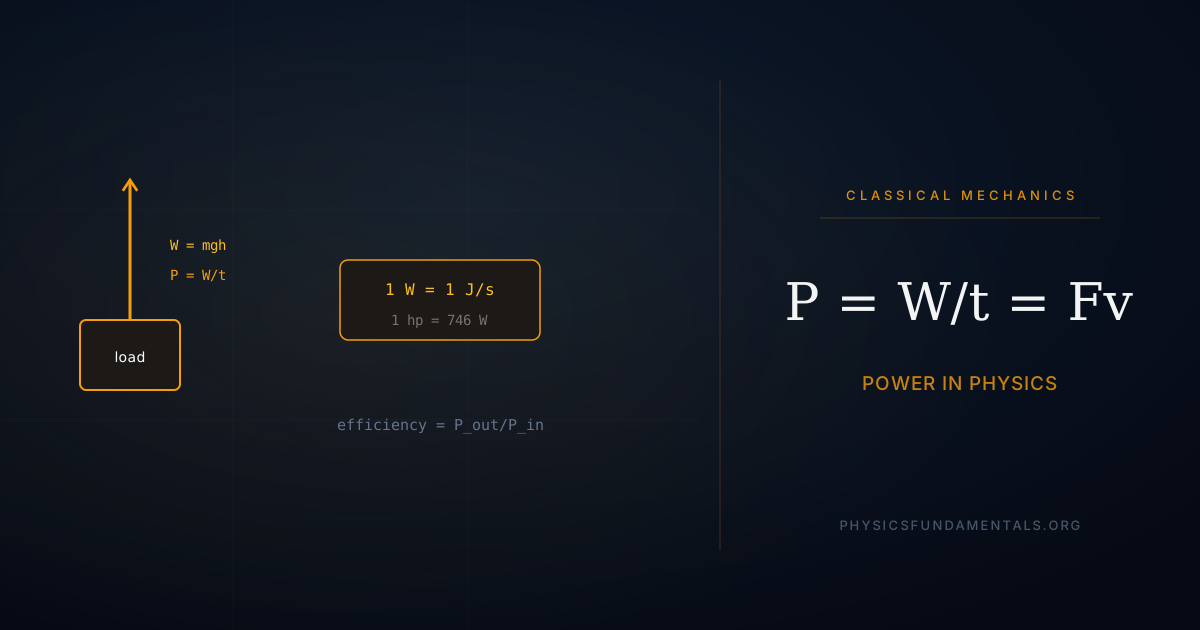
Power in physics — electric motor and light bulb illustrating energy transfer rate in watts
Classical Mechanics
Physics Fundamentals Editorial Team12 min read

Power in Physics: Formula P = W/t, P = Fv & 4 Worked Examples

Lift a 10 kg box one metre in one second versus one minute — the work done is the same, but the second case feels much easier. What's different is the rate at which you do that work. That rate...

Read article →
Momentum and impulse — collision between two balls showing momentum transfer
Classical Mechanics
Physics Fundamentals Editorial Team14 min read

Momentum and Impulse: p = mv Formula, Conservation Law & 3 Worked Examples

A cricket ball and a lorry travelling at the same speed are very different things to stop. The lorry is far harder to halt — not just because it is heavier, but because it has far more momentum...

Read article →
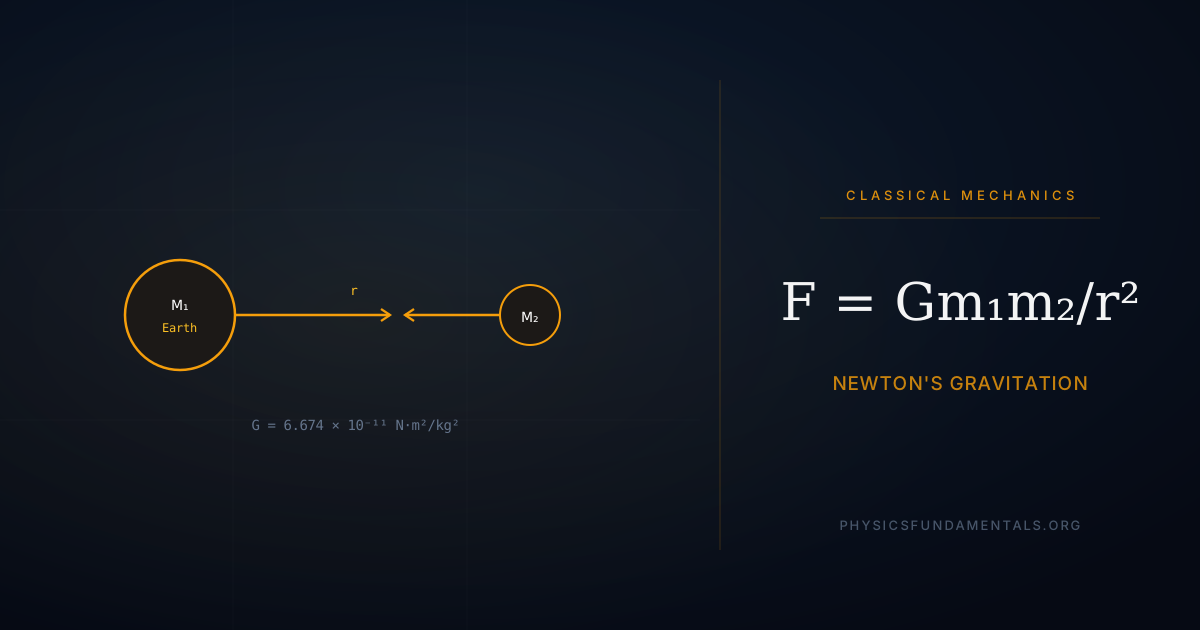
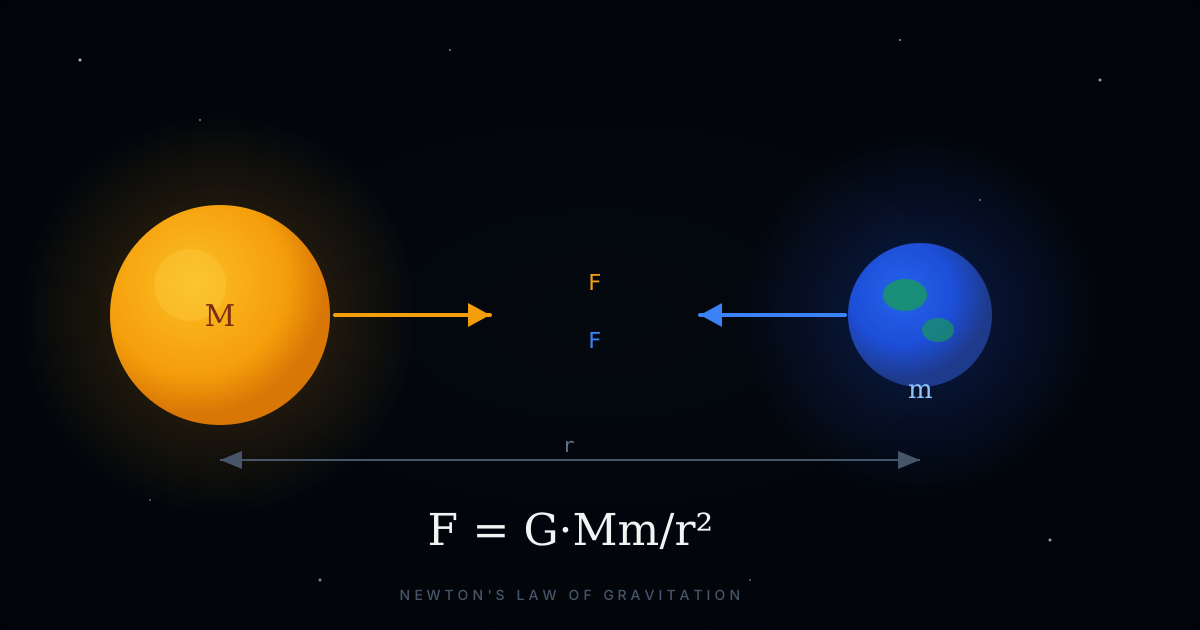
Newton's law of universal gravitation — two masses attracting each other with gravitational force arrows
Classical Mechanics
Physics Fundamentals Editorial Team15 min read

Newton's Law of Universal Gravitation: F = Gm₁m₂/r² Full Guide

In 1687, Isaac Newton published his Principia Mathematica — arguably the most important scientific work ever written. Among its results was a single equation that unified the fall of an apple w...

Read article →
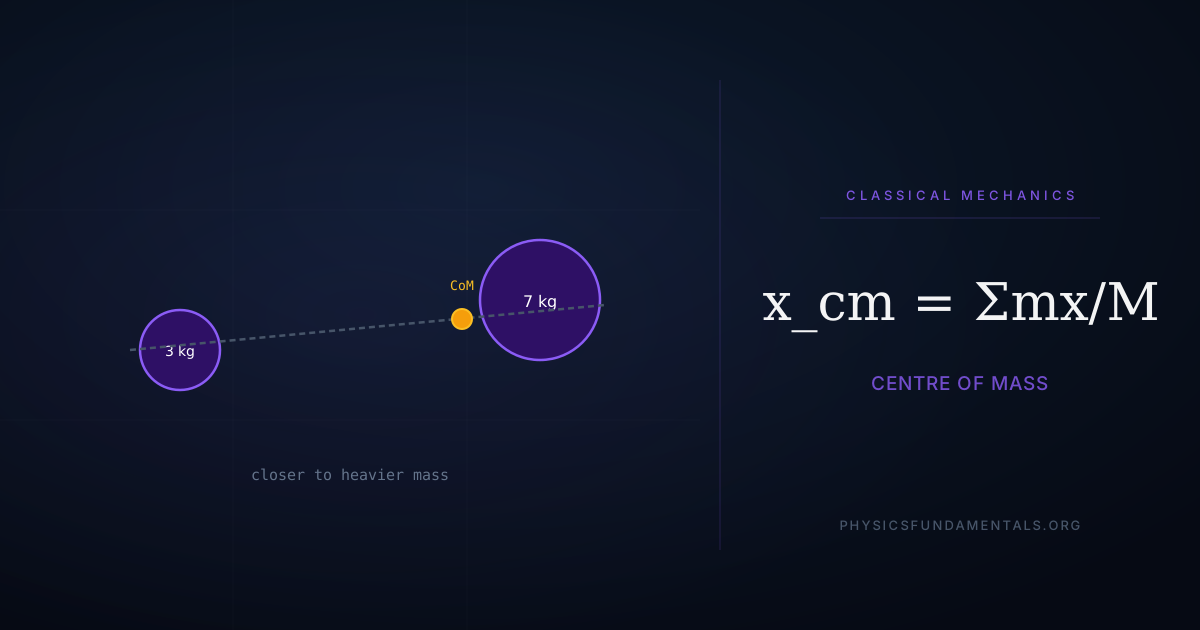
Centre of mass — irregular shaped object with centre of mass marked, and a dumbbell showing mass distribution
Classical Mechanics
Physics Fundamentals Editorial Team13 min read

Centre of Mass: Definition, Formula & Worked Examples

A hammer can be balanced on a fingertip — but only if you position your finger at exactly the right point. A high-jumper arches their back over the bar so that their centre of mass passes under...

Read article →
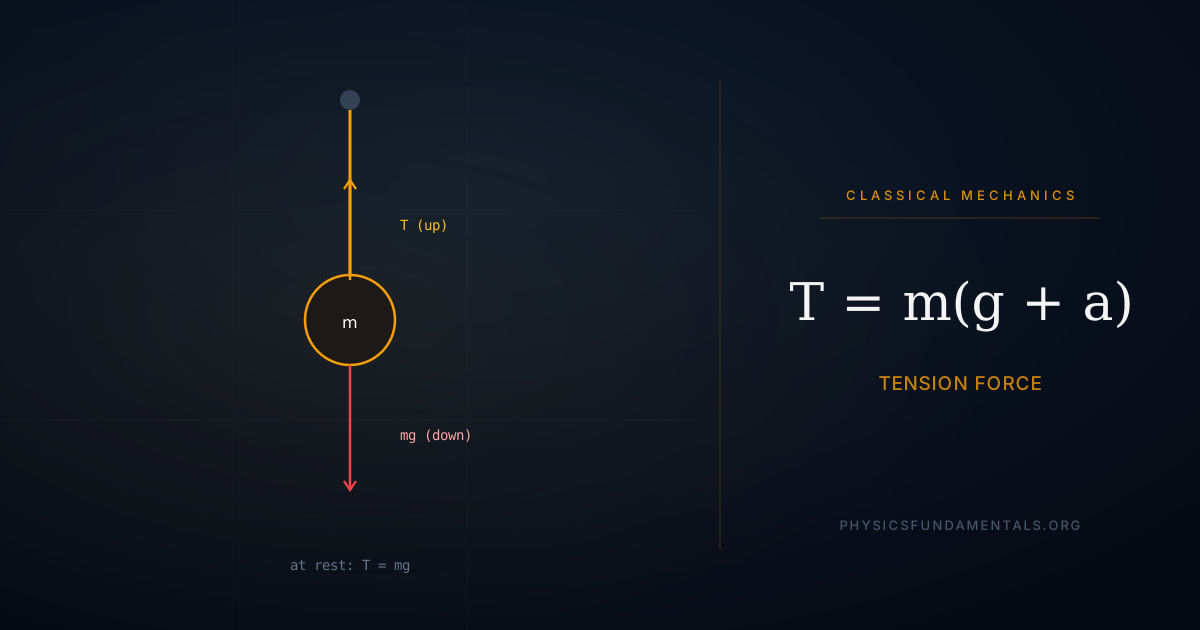
Tension force — block hanging from a rope showing tension force arrows acting along the rope
Classical Mechanics
Physics Fundamentals Editorial Team12 min read

Tension Force: Definition, Formula T = mg, Atwood Machine & Examples

A cable holds a suspension bridge in place. A rope supports a rock climber. A string connects two masses in an Atwood machine. In each case, the force transmitted through the material is tensio...

Read article →
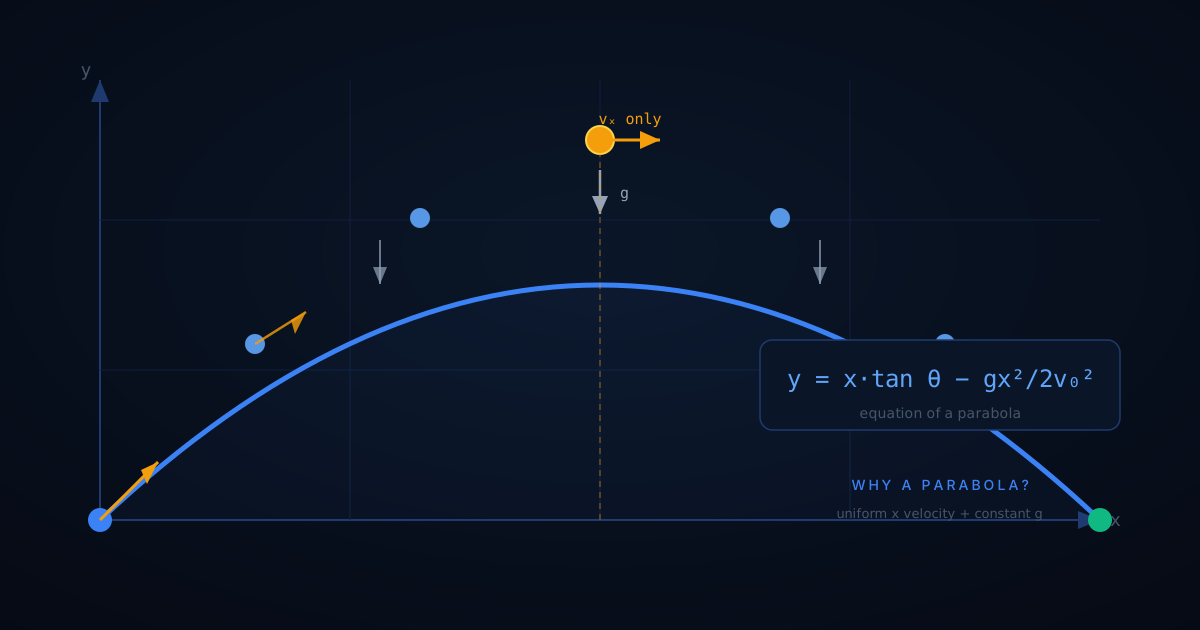
Projectile motion parabola — water fountain arc showing the curved parabolic trajectory under gravity
Classical Mechanics
Physics Fundamentals Editorial Team13 min read

Why Is Projectile Motion a Parabola? Physics Explained with Proof

Every object launched into the air — a basketball, a cannonball, a water droplet from a fountain — traces the same distinctive curved path under gravity alone. That curve is a parabola, one of...

Read article →
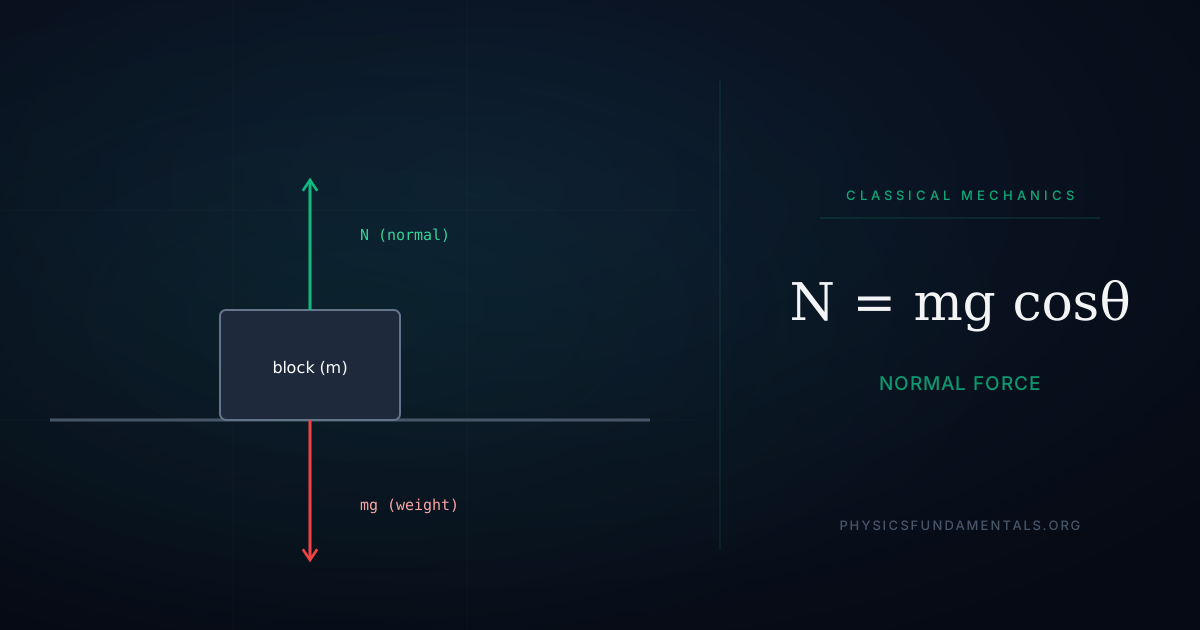
Normal force — block resting on a surface with weight and normal force arrows labelled
Classical Mechanics
Physics Fundamentals Editorial Team12 min read

Normal Force: Definition, Formula N = mg & Worked Examples

Every time you sit in a chair, stand on a floor, or press a book against a table, a force pushes back on you — perpendicular to the surface. This is the normal force. It is the contact force th...

Read article →
Newton's law of universal gravitation — Earth from space showing gravitational attraction between masses
Classical Mechanics
Physics Fundamentals Editorial Team11 min read

Newton's Law of Gravitation F = Gm₁m₂/r²: Formula & Worked Examples

Every object in the universe with mass attracts every other object with mass. This isn't a metaphor — it's a precise, quantitative law. Newton's law of universal gravitation, published in 1687...

Read article →
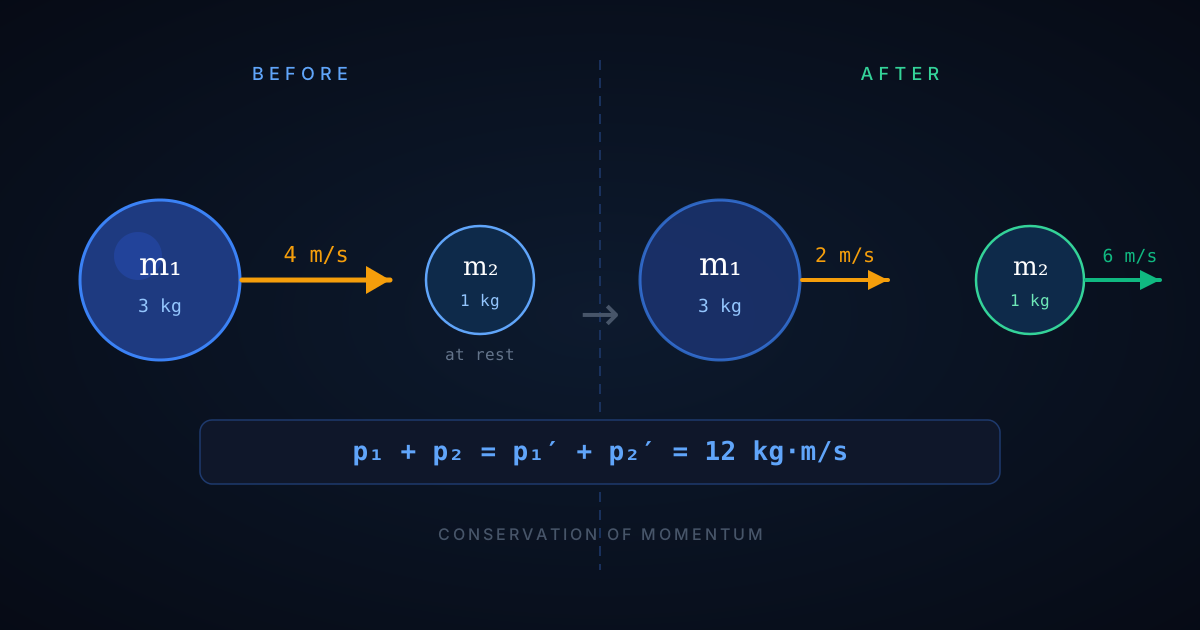
Conservation of momentum — Newton's cradle demonstrating elastic collision and momentum transfer
Classical Mechanics
Physics Fundamentals Editorial Team16 min read

Conservation of Momentum: Formula, Elastic vs Inelastic Collisions & 3 Examples

When two billiard balls collide, when a rocket expels exhaust, when a gun recoils after firing, when subatomic particles scatter in a collider — the same deep principle governs every one of the...

Read article →
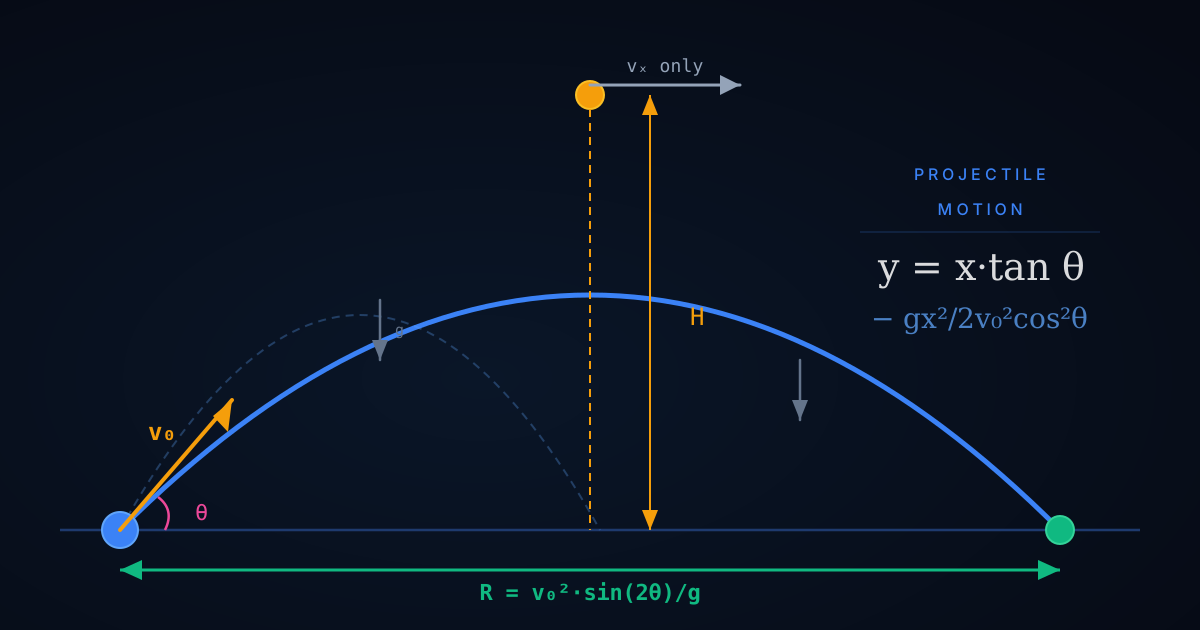
Projectile motion — basketball tracing a parabolic arc through the air
Classical Mechanics
Physics Fundamentals Editorial Team15 min read

Projectile Motion: Range, Height & Time Formulas with 4 Worked Examples

A basketball arcs toward the hoop. A cannonball launches from a cliff. A long-jumper leaves the ground at an angle. All are examples of projectile motion — motion under gravity alone, with no o...

Read article →
Force equals mass times acceleration — athlete demonstrating F=ma with explosive push
Classical Mechanics
Physics Fundamentals Editorial Team14 min read

Newton's Second Law F = ma: Formula, Which Law It Is & 5 Worked Examples

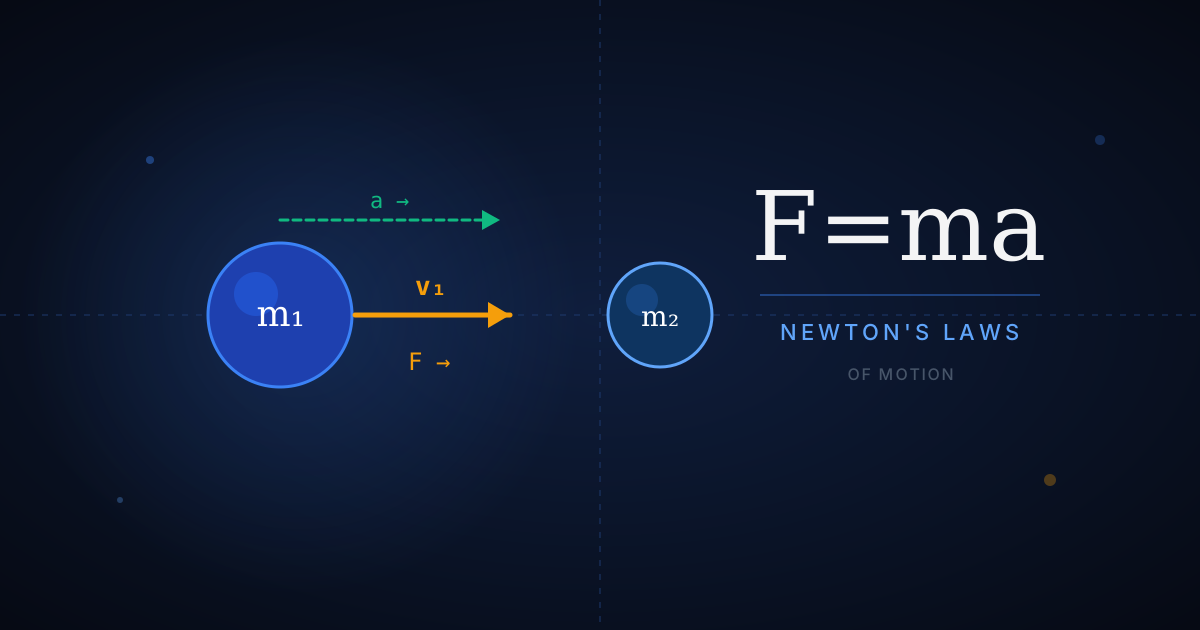
Newton's Second Law of Motion states that the net force acting on an object equals the object's mass multiplied by its acceleration: F = ma. The acceleration produced is directly proportional t...

Read article →
Newton's laws of motion — billiard balls illustrating force, mass and acceleration
Classical Mechanics
Physics Fundamentals Editorial Team16 min read

Newton's Laws of Motion: All Three Laws, Formulas & Examples

Every object you have ever seen — every car on the highway, every satellite in orbit, every atom vibrating in your coffee cup — follows the same three rules. These are Newton's laws of motion,...

Read article →

Never miss a Classical Mechanics article

Get new physics articles, study tips, and platform updates delivered to your inbox every Thursday.

Physics Fundamentals

Channel · Updates only

👋 Get concise physics updates — new articles, calculators, and tools. Your number stays private. No spam. No group chats. Just worthy content.

Your number is never shared or visible to others

Join the Channel